
PM Internship Program 2026 (BNIP): 60,000 Paid Internships — Who Qualifies and How to Apply
If you have a degree but no job because every employer wants “experience” you were never given a chance to earn, Pakistan’s PM Internship Program is built exactly for you. Officially the Prime Minister’s Ba-Ikhtiyar Naujawan Internship Program (BNIP), it offers 60,000 paid internships to fresh graduates across the country, with a monthly stipend and a government-backed certificate at the end. Here is the honest, complete breakdown — including the part where you protect yourself from the fake portals cashing in on it.
Quick answer: BNIP is a federal scheme run by the Ministry of Planning, Development & Special Initiatives that places graduates into six-month to one-year paid internships in public, private and development-sector organisations. It offers 60,000 slots across two tracks (WSIP and BSIP), with a monthly stipend of roughly Rs 25,000 to Rs 40,000, and applications are made only on the official portal, bnip.gov.pk.
⚠️ Important: Deadlines and cycle details change. Confirm the current application window and exact rules on the official portal (bnip.gov.pk) before relying on any date you read elsewhere — including here. This guide explains how the programme works; the portal is the single source of truth for live dates.
What is the PM Internship Program (BNIP)?
BNIP was launched by the Federal Ministry of Planning, Development & Special Initiatives on the Prime Minister’s direction to tackle a specific, painful problem: educated youth unemployment. Pakistan produces huge numbers of graduates every year, but many cannot enter the job market because they lack the practical, on-the-job experience employers demand. BNIP breaks that cycle by placing graduates into real internships — combining off-job and on-job training — so they finish with genuine work experience and a certificate that makes them far more employable.
The scale is significant: 60,000 paid internships nationwide, spread across public, private and development-sector host organisations, with placements matched to your field and skills.
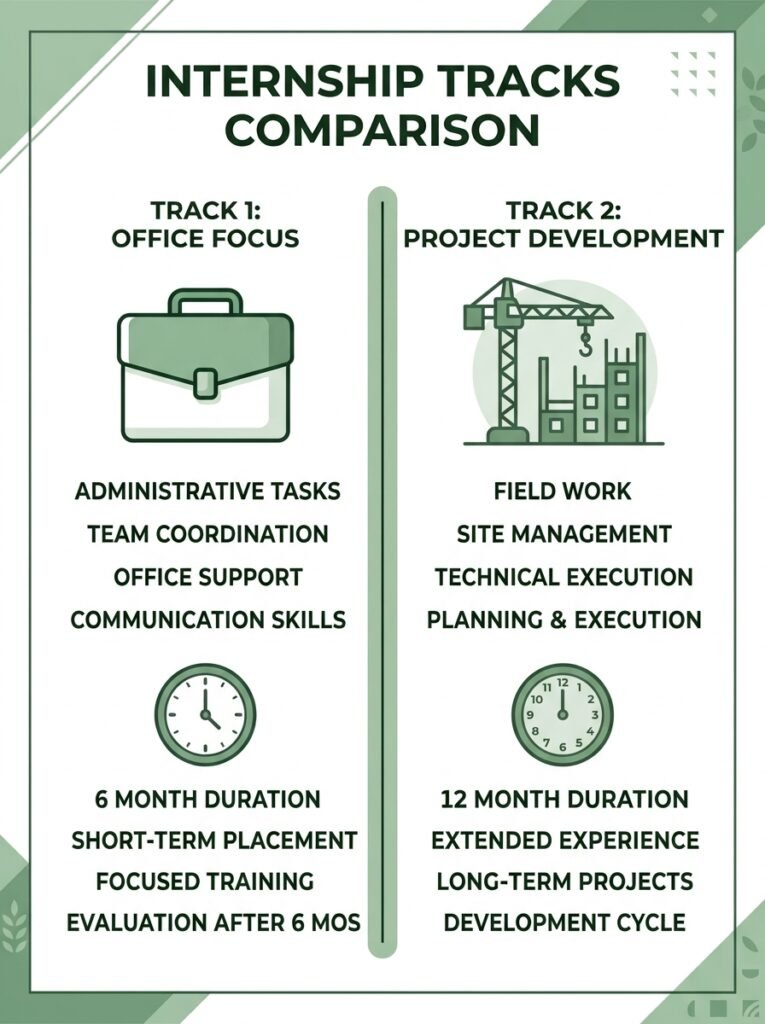
The two tracks: WSIP vs BSIP
This is the part most guides blur, and it decides your stipend and duration. BNIP runs through two components:
WSIP — Work-for-Skills Internship Program
- Around 40,000 paid internships.
- Duration: 6 months.
- Placed in public, private and development-sector organisations.
- Stipend: Rs 25,000 per month, paid on completion and submission of your monthly deliverables.
- On finishing, you receive a certificate from your host organisation and from the Ministry.
BSIP — Build-for-Skills Internship Program
- Around 20,000 internships.
- Duration: one year.
- Placed in new or ongoing Public Sector Development Projects (PSDPs).
- Stipend: Rs 40,000 per month for candidates with 16 years of education; Rs 30,000 per month for those with a recognised three-year diploma.
- Certificate issued by the concerned Project Director and the Ministry.
In short: WSIP is the shorter, broad-sector track; BSIP is the longer, higher-paid track tied to government development projects.
Who is eligible?
Eligibility is straightforward, but the details matter:
- Education: a minimum of 16 years of education from an HEC-recognised university/institute (or an equivalent qualification from abroad). For the BSIP project track, a recognised three-year technical diploma (associate engineer, paramedic/technician, etc.) also qualifies.
- A concession for underserved applicants: candidates from flood-affected or backward areas may qualify with a 14-year Bachelor’s degree.
- Recency: your degree should have been completed within the last three years — this is a scheme for fresh graduates, not mid-career professionals.
- Employment status: it is designed for graduates who are not already in full-time permanent jobs.
How to apply (the safe, official way)
The process is entirely online and free:
- Go to the official portal, bnip.gov.pk — and nowhere else.
- Click Register and create your account with your basic personal details.
- Log in to your personalised dashboard.
- Complete your profile and upload the required documents (degree, CNIC, and supporting papers).
- Browse and apply to internship opportunities in your field.
- Track your application status on the dashboard.
There is no application fee to apply through the official portal, and no agent is required.
Is it worth it? An honest take
For the right person, yes — but be clear-eyed about what it is and isn’t.
Where it genuinely helps: the stipend is real money for a fresh graduate, and more importantly, six to twelve months of documented, certified experience can transform your CV. Many employers treat completed BNIP internships as relevant experience, which helps you clear the “two years’ experience” wall that blocks so many entry-level applicants. For graduates from smaller cities or without a professional network, that first verified placement is often the hardest thing to get — and this scheme hands it to you.
Where to keep expectations realistic: the stipend is a training allowance, not a full salary, and it is tied to submitting your monthly deliverables. It is not a permanent government (BPS) job, and completing it does not guarantee one. Think of it as a paid bridge into the job market, not a destination.
Who this does NOT work for
- You already have a full-time permanent job. The programme is for graduates trying to enter the market, not those already in it.
- Your degree is older than the eligibility window or is not from an HEC-recognised institute.
- You need a full salary immediately. A training stipend will not replace a full-time wage.
- You want a guaranteed permanent government post at the end. The internship builds experience; it is not a direct hiring pipeline into a BPS role.
Beware the BNIP scams
Government schemes for youth attract fraudsters fast, so protect yourself:
- Apply only on bnip.gov.pk. Fake look-alike portals and Facebook pages harvest your data and money — check the address bar carefully.
- The official application is free. Anyone demanding a “registration fee,” “processing charge,” or payment for “guaranteed selection” is running a scam.
- No agent can guarantee your selection. Selection is merit- and criteria-based; guarantees are a red flag.
- Never share your CNIC, passwords or OTPs with a “helper” or unofficial page.
- Verify every deadline and announcement on the official portal or Ministry channels before acting on a date you saw on a blog or WhatsApp forward.
Key Takeaways
- BNIP (the PM Internship Program) offers 60,000 paid internships to Pakistani graduates, run by the Ministry of Planning, Development & Special Initiatives.
- It has two tracks: WSIP (≈40,000 slots, 6 months, Rs 25,000/month) and BSIP (≈20,000 slots, 1 year, Rs 30,000–40,000/month on PSDP projects).
- Eligibility: 16 years of HEC-recognised education (14 years for flood-affected/backward areas), degree completed within the last three years.
- Apply only on bnip.gov.pk — it’s free, online, and needs no agent.
- Verify the live deadline on the official portal, and never pay anyone for “guaranteed” selection.
FAQ
1. What is the PM Internship Program 2026 in Pakistan? It is the Prime Minister’s Ba-Ikhtiyar Naujawan Internship Program (BNIP), a federal scheme offering 60,000 paid internships to graduates in public, private and development-sector organisations, with a monthly stipend and a government-backed completion certificate.
2. How much is the BNIP stipend? It depends on the track. WSIP interns receive about Rs 25,000 per month for six months. BSIP interns on public-sector projects receive around Rs 40,000 per month for 16-years-education holders, or Rs 30,000 for recognised three-year diploma holders, for one year.
3. Who is eligible for the PM Internship Program? Graduates with at least 16 years of education from an HEC-recognised institute (or equivalent from abroad), whose degree was completed within the last three years. Candidates from flood-affected or backward areas may qualify with a 14-year Bachelor’s degree.