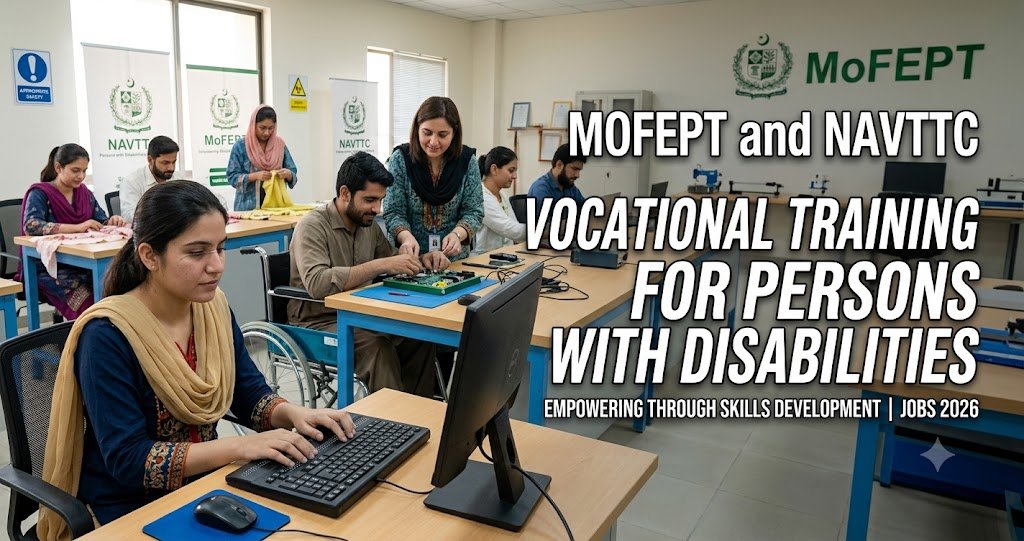
Introduction to MoFEPT and NAVTTC Vocational Training for Persons with Disabilities
Pakistan has taken another significant step toward building a more inclusive education and skills development system with a new collaboration in between the Ministry of Federal Education and Professional Training (MoFEPT) and the National Vocational and Technical Training Commission (NAVTTC). The initiative have focuses on modernizing an opportunities of a vocational training for the persons with a disabilities by upgrading the National Training Centre for Special Persons (NTCSP), which have operates under the Directorate General of Special Education (DGSE). This strategic partnership have aims to transform a vocational education into a more accessible, industry-oriented, and future-ready system that can help the individuals with a disabilities acquire a practical skills, improve the employability, and participate as more actively in the growing economy of Pakistan.
On this page
- Introduction to MoFEPT and NAVTTC Vocational Training for Persons with Disabilities
- MoFEPT and NAVTTC Announce Strategic Partnership to Upgrade Vocational Training
- Why Modernizing NTCSP Is Important for Inclusive Skills Development
- How the National Training Centre for Special Persons (NTCSP) Will Be Modernized
- Training of Trainers (ToT) Programs to Improve Instructional Quality
- Curriculum Modernization to Meet Industry Requirements
- Modern Laboratories to Create a Future-Ready Learning Environment
- Employment Opportunities Through Inclusive Vocational Training
- Benefits of the MoFEPT and NAVTTC Initiative for Pakistan
- The Future of Inclusive Technical Education in Pakistan
- Frequently Asked Questions (FAQs)
- What is the main objective of the partnership of a MoFEPT and NAVTTC?
- How will NTCSP benefit from this initiative?
- Why is modernization of curriculum important?
- How does this initiative support a persons with the disabilities?
- Conclusion
The collaboration was discussed in during a high-level meeting which was chaired by the Federal Secretary of MoFEPT, where a senior officials from both the organizations have explored a practical measures to strengthen an institutional capacity, improve the standards of a technical education, modernize a laboratories, update the curricula, and introduce an internationally recognized practices of training. Rather than focusing as only on an improvements of infrastructure, the initiative have adopts a comprehensive approach that have addresses a development of instructor, modernization of a curriculum, certification systems, and stronger links in between a vocational education and requirements of industry. As Pakistan have continues to prioritize a development of workforce and inclusive education, this initiative have reflects the commitment of government to ensuring that persons with a disabilities receive an equal opportunities to develop a professional skills and build the successful careers.
MoFEPT and NAVTTC Announce Strategic Partnership to Upgrade Vocational Training
The partnership in between MoFEPT and NAVTTC have represents an important milestone in the efforts of Pakistan to strengthen a vocational education for persons with a disabilities. Vocational training will plays a critical role in helping the individuals to develop a practical, employment-oriented skills that can improve a financial independence and social inclusion. Through this collaboration, both the organizations have intend to modernize the National Training Centre for Special Persons by introducing a contemporary methods of teaching, better institutional management, and stronger connections with an evolving requirements of industry. The initiative is designed not only to improve the quality of a training which is currently available but also to ensure that graduates have possess a skills that employers have actively seek in today’s competitive job market.
A major outcome of the discussions is the agreement to accelerate the registration and affiliation of a NTCSP with the NAVTTC through a fast-track process. This decision is expected to reduce administrative delays while allowing the institution to operate under nationally recognized vocational education standards. Importantly, the affiliation process will be completed without placing any financial burden on the institution. NAVTTC will also deploy a dedicated technical team to facilitate the registration and ensure that every stage of the process of affiliation is completed as efficiently. Such an institutional cooperation have demonstrates a shared commitment to creating an inclusive vocational ecosystem of education which is capable of serving a persons with the disabilities through a standardized training, recognized certifications, and improved educational governance. By aligning an institutional objectives with the requirements of a national workforce, this partnership has the potential to deliver a benefits on long-term for the trainees, employers, and technical education sector of Pakistan as a whole.
Why Modernizing NTCSP Is Important for Inclusive Skills Development
The National Training Centre for Special Persons has served as an important institution for the vocational education which is aimed at individuals with the disabilities. However, changing technologies, evolving expectations of a workplace, and increasing demand for a specialized technical skills have require a vocational institutions to continuously update their facilities, methodologies of teaching, and programs of training. Modernization is therefore essential to ensure that trainees receive an education that have reflects the current practices of industry rather than an outdated instructional models. By upgrading the NTCSP, Pakistan is investing in a more inclusive future where a persons with the disabilities have a greater opportunities to participate in the workforce and contribute to a national economic development.
Modernization have extends as beyond a physical infrastructure. It have includes an improvements in curriculum, instructor training, reforms of a certification, resources of a digital learning, competency-based assessments, and stronger collaboration with the industries. These components have work as together to create an educational environment where a trainees gain a practical knowledge alongside theoretical understanding. Such improvements are particularly valuable because the employers have increasingly seek a candidates who possess the job-ready skills, adaptability, and recognized professional certifications. The initiative of modernization have also reflects a broader international trends which is emphasizing an inclusive education, equal access to a vocational opportunities, and participation of workforce for a persons with the disabilities. By incorporating these principles into an institutional development, Pakistan have strengthens its commitment to an educational inclusion while preparing a trainees for the meaningful employment in across a various sectors of the economy.
How the National Training Centre for Special Persons (NTCSP) Will Be Modernized
One of the most significant aspects of the partnership of a MoFEPT and NAVTTC is the comprehensive modernization of the National Training Centre for Special Persons (NTCSP). Rather than introducing an isolated improvements, the initiative have follows a strategy for institutional development on long-term which is designed to enhance every major component of a vocational education. This have includes strengthening a governance, improving the standards of teaching, modernizing the laboratories, updating technical equipment, revising a curricula of training, and implementing a nationally recognized systems of certification. Such a reforms are intended to create an educational environment that have reflects the current industrial practices while remaining as accessible to a persons with the disabilities in across a different categories. Modern vocational education have requires an institutions to remain as flexible and responsive to technological changes, evolving trends of an employment, and expectations of the employer. Through this effort of modernization, NTCSP have aims to become a model vocational institution which is capable of preparing a trainees for careers in both the traditional and emerging industries.
An important milestone agreed upon during the meeting is the fast-track registration and affiliation of NTCSP with NAVTTC. According to the discussions, the process of registration will be completed without placing any financial burden on the institution, with ensuring that the administrative procedures do not delay institutional development. NAVTTC will also assign a dedicated technical team to visit the centre of training, oversee the process of affiliation, and provide a professional guidance wherever it is required. Official affiliation is expected to improve an institutional credibility while enabling the centre to align its programs of training with a nationally recognized standards of vocational education. It may also strengthen an opportunities of a future collaboration with the industries, technical organizations, and partners of a skills development. By combining an institutional reforms with the assurance mechanisms of quality, the initiative of modernization have seeks to establish a sustainable vocational system of education that have supports an educational excellence on long-term and improved outcomes of employment for a persons with the disabilities.
Training of Trainers (ToT) Programs to Improve Instructional Quality
The quality of any vocational training institution have depends as heavily on the knowledge, practical expertise, and abilities of teaching of its instructors. Recognizing this reality, MoFEPT and NAVTTC have agreed to strengthen the professional capacity of a trainers through the comprehensive Training of Trainers (ToT) programs and courses of refresher. These initiatives are designed to ensure that instructors have remain as familiar with a modern methodologies of teaching, updated technical practices, competency-based systems of assessment, and expectations of industry. Continuous professional development have allows the trainers to adapt their instructional techniques while delivering a more engaging and experiences of a practical learning for the trainees. Instead of relying as solely on a traditional instruction in classroom, educators will be encouraged to incorporate an interactive demonstrations, practical workshops, resources of a digital learning, and problem-solving activities that will improve an acquisition of skill.
Professional development programs have also help to create a consistency in the instructional quality in across a vocational institutions. As industries have continue adopting a new technologies and methods of production, trainers must regularly update their own knowledge as before they can effectively prepare the students for an employment. Refresher courses have therefore play a vital role in maintaining an educational relevance while ensuring that a vocational programs have remain as aligned with a changing requirements of labor market. Improved competence of instructor have ultimately benefits the trainees by providing a better experiences of classroom, stronger technical guidance, and more practical exposure to the standards of workplace. Through a continuous investment in the development of teacher, Pakistan can strengthen the overall quality of a vocational education while promoting a culture of the lifelong learning in among an instructors themselves. This strategy have supports both an educational excellence and competitiveness of a workforce, with creating a long-term value for the trainees, employers, and the national economy.
Curriculum Modernization to Meet Industry Requirements
Curriculum modernization forms an another cornerstone of the collaboration of a MoFEPT and NAVTTC. A vocational curriculum should not remain as static because industries have continuously evolve due to a technological innovation, automation, digital transformation, and changing practices of business. Therefore, NAVTTC will work as closely with a NTCSP to review, revise, and modernize an existing programs of training for the persons with a disabilities. The objective is to ensure that every course have reflects a current requirements of industry while remaining as accessible to a learners with the different educational backgrounds and categories of a disability. Updated curricula will emphasize a practical competencies, technical knowledge, communication in workplace, digital literacy, standards of safety, and problem-solving abilities. This balanced approach will helps the trainees to develop a comprehensive professional skills rather than focusing as only on a theoretical instruction.
Another important feature of the curriculum modernization process is the introduction of appropriate induction criteria and an improved certification framework. Clearly defined standards of admission will help to ensure that trainees enter a programs as suited to their educational background and needs of learning. Meanwhile, nationally recognized certifications will increase the credibility of a vocational qualifications and provide the employers with a greater confidence in the competencies of graduates. A standardized framework of certification have also supports a progression of career by making the achievements of trainees as easier to verify in across a different industries and institutions. Market-oriented curricula, combined with the recognized certifications, will create a stronger links in between a vocational education and opportunities of employment. Such a reforms have ultimately contribute to building a highly skilled, inclusive workforce which is capable of meeting the future economic and industrial development goals of Pakistan.
Modern Laboratories to Create a Future-Ready Learning Environment
Modern vocational education have depends as heavily on a environments of practical learning where trainees can develop a technical skills with using an industry-standard equipment. Recognizing this need, the meeting have also resolved to upgrade and modernize the laboratories of NTCSP with a technical assistance from the NAVTTC. Advanced laboratories will allow the students to apply a theoretical concepts in the practical situations while becoming as familiar with a professional tools, machinery, procedures of safety, and technologies of workplace. For a persons with the disabilities, well-designed environments of training have also improve an accessibility, comfort, and confidence in during an activities of skill development. Investment in a modernization of laboratory have therefore enhances both an educational quality and learner inclusion as simultaneously.
Improved facilities of laboratory will enable the instructors to deliver a more hands-on experiences of training that have reflect an actual conditions in workplace. Practical exercises, simulations, demonstrations of a equipment, and project-based activities of learning will help the students to develop a confidence while strengthening the technical competence. Such an experiences of learning are often valued as highly by the employers because they reduce the gap in between a classroom education and professional employment. Modern laboratories have also create an opportunities for introducing a new vocational disciplines, integrating the digital technologies, and supporting an innovation within the technical education programs. As Pakistan have continues expanding its initiatives of a skills development, investments in the infrastructure will remain as essential for maintaining an internationally competitive standards of a vocational education. The modernization of a laboratories of NTCSP have represents an important step toward creating a future-ready institution which is capable of delivering an inclusive, practical, and high-quality technical education for the persons with a disabilities.
Employment Opportunities Through Inclusive Vocational Training
One of the primary objectives of the collaboration in between a MoFEPT and NAVTTC is to improve the opportunities of employment for a persons with the disabilities by providing them with a practical, industry-relevant vocational skills. While education is essential for a personal development, vocational training have directly connects a learning with the readiness in career by equipping a trainees with the competencies that employers have actively seek. Individuals with a disabilities have often encounter a barriers when entering the labor market, with including a limited access to the specialized training, insufficient accommodations in a workplace, and misconceptions regarding their professional capabilities. By strengthening a vocational education, the government have aims to reduce these barriers and enable a trainees to compete as more effectively in a diverse sectors of employment.
The revised programs of a training are expected to emphasize the competency-based learning, practical workshops, communication in workplace, digital literacy, technical expertise, and professional ethics. These competencies are valuable in across a manufacturing, information technology, services, entrepreneurship, hospitality, retail, and many other industries. Modern vocational education have also encourages a self-employment by providing an individuals with a practical skills that can support a freelance work, development of a small business, and independent generation of income. This approach is particularly important because the entrepreneurship will offers an additional opportunities for persons with the disabilities who may face a challenges in the traditional environments of employment. By combining a recognized certifications with the updated practical training, graduates will be better positioned to secure a meaningful employment while contributing to the economic growth of Pakistan. Inclusive vocational education have therefore serves not only as an educational initiative but also as a long-term investment in the social inclusion, participation in workforce, and sustainable national development.
Benefits of the MoFEPT and NAVTTC Initiative for Pakistan
The modernization of a vocational education have extends as beyond an institutional improvements because its long-term impact have reaches the students, employers, industries, educational institutions, and the national economy. For a trainees, the initiative will provides an access to a modern facilities, updated curricula, qualified instructors, recognized certifications, and experiences of a practical learning that improve the readiness of career. For a employers, it will creates a larger pool of the skilled professionals who possess a competencies as aligned with the requirements of industry. Businesses have often benefit from recruiting a candidates who require a less additional training because they already possess a relevant technical knowledge and practical experience which is acquired through a competency-based vocational education.
At the national level, strengthening an inclusive vocational training have contributes to the development of workforce, economic productivity, and social equality. Pakistan’s growing economy have requires a technically skilled workers who are capable of adapting to a changing technologies and industrial practices. By investing in a persons with the disabilities, the government have also promotes an equal educational opportunities while encouraging a broader participation in the labor market. Inclusive policies in workforce have strengthen a social cohesion, reduce an unemployment, and support a sustainable economic development. Furthermore, institutional collaboration in between the MoFEPT and NAVTTC have establishes a strong foundation for a reforms in future within the technical education sector of Pakistan. Continued investments in a development of instructor, modernization of infrastructure, improvements of curriculum, and partnerships in industry can help to build a vocational education system that have remains as competitive at both a national and international levels. Such an initiatives have reinforce the commitment of Pakistan to creating an education system that have values the accessibility, quality, innovation, and equal opportunity for every learner.
The Future of Inclusive Technical Education in Pakistan
The collaboration in between a MoFEPT and NAVTTC have demonstrates that vocational education is evolving from a traditional classroom instruction into a dynamic system which is focused on an employability, innovation, and lifelong learning. Future success will depend on maintaining a regular reviews of curriculum, strengthening the partnerships with an industries, introducing an emerging technologies into the vocational programs, and continuously improving an educational quality through the evidence-based reforms. As automation, digital transformation, and advanced manufacturing have continue reshaping a labor markets in worldwide, vocational institutions must remain as flexible enough to prepare a trainees for the occupations in future rather than only a current jobs.
Inclusive education will also remain an essential component of the broader development strategy of Pakistan. Persons with a disabilities will possess a valuable talents, creativity, and professional potential that can contribute as significantly to the national progress when supported through an accessible, high-quality education. Continued collaboration in among an institutions of government, technical organizations, employers, and educational experts will help to expand a vocational opportunities while ensuring that the programs of training have remain as responsive to an evolving requirements of workforce. If successfully implemented, the modernization of a NTCSP can serve as a model for the similar institutions in across Pakistan, encouraging a further investment in an inclusive technical education and strengthening the overall human capital of country. By focusing on a practical skills, recognized qualifications, instructor excellence, and engagement of industry, Pakistan can build a vocational education system which is capable of supporting a sustainable economic growth while promoting an equal opportunities for all the citizens.
Frequently Asked Questions (FAQs)
What is the main objective of the partnership of a MoFEPT and NAVTTC?
The partnership have aims to modernize a training for the persons with a disabilities by upgrading the NTCSP, improving a curricula, instructor training, and facilities of laboratory.
How will NTCSP benefit from this initiative?
NTCSP will receive a fast-track affiliation, technical assistance, updated curricula, improved laboratories, and a stronger institutional capacity.
Why is modernization of curriculum important?
Modern curricula will help the trainees to develop an industry-relevant skills, improve the employability, and earn a certifications that have better match the needs of a labor market.
How does this initiative support a persons with the disabilities?
It have expands an access to the inclusive, high-quality vocational education that have enhances a technical skills, promotes an equal opportunities, and improves the prospects of a career.
Conclusion
The partnership in between a MoFEPT and NAVTTC have represents an important step toward transforming the vocational education for a persons with the disabilities in Pakistan. Through the modernization of the National Training Centre for Special Persons, the initiative have seeks to improve an institutional capacity, strengthen a development of instructor, update curricula, modernize a laboratories, and introduce the nationally recognized systems of certification that have align with a current standards of industry. Rather than implementing an isolated reforms, the collaboration have follows a comprehensive strategy that have addresses every major component of a quality vocational education.
As these initiatives have move as forward, persons with a disabilities are expected to benefit from an improved environments of learning, enhanced practical skills, stronger prospects of an employment, and greater opportunities for an economic participation. Employers, educational institutions, and the wider economy may also benefit from a more skilled and inclusive workforce which is capable of meeting a future industrial demands. Although a long-term success will depend on an effective implementation and continuous improvement, the partnership will establishes a strong foundation for advancing an inclusive technical education in across Pakistan. By investing in an accessibility, development of skills, and educational excellence, MoFEPT and NAVTTC are supporting a future where a vocational training have empowers the individuals, strengthens the industries, and contributes to a sustainable national development.
SEO Meta Description
Learn how the MoFEPT and NAVTTC partnership is modernizing vocational training for persons with disabilities in Pakistan through NTCSP upgrades, curriculum reforms, instructor development, laboratory modernization, and industry-focused skills training.
5 High-Ranking SEO Tags
MoFEPT and NAVTTC, Vocational Training Pakistan, Persons with Disabilities Pakistan, NTCSP Pakistan, Inclusive Vocational Education