
The AI Traffic Numbers Everyone Quotes Are Wrong — and the Real Ones Are Worse for Small Sites
AI Overviews Traffic Decline If you run a content site, you have read a version of this story roughly forty times since 2024. Google’s AI Overviews are eating your traffic. Zero-click is at 69%. Or 60%. Or 80%. Or 22%.
All four of those numbers have been published this year. They cannot all be true, and the reason they’re all circulating is that nobody is telling you they measure completely different things.
So here’s the honest version, built only from studies that named their method. Three findings, and one of them is genuinely good news that almost nobody has reported.
Quick answer: AI Overviews have measurably cut publisher click-through rates — Ahrefs found a 58% reduction for top-ranking pages on AIO keywords, and Chartbeat recorded a 33% global fall in Google search referrals to publishers in the year to November 2025. But the decline appears to have bottomed out in December 2025 and partially rebounded since.
Finding 1: “Zero-click” is four different statistics wearing a trench coat
This is the single biggest source of confusion in the niche, and it’s why you can read two credible-looking posts and come away with opposite conclusions.
- Similarweb reports zero-click at 69% of all queries — as cited by Search Engine Journal.
- The Digital Bloom puts it at 60%, up from 58% in 2024.
- Click Vision’s 2026 data says the zero-click rate on AI Overview queries specifically hits 80–83%.
- Datos, in its Q1 2026 State of Search report published 27 April 2026, found the US zero-click rate at 22.4% — using a strict clickstream methodology.
That last number is not a typo, and Datos is not incompetent. It’s measuring something else.
Keyword-level SERP analysis asks: for this query, did a click happen? Clickstream panel data asks: of the searches this real person performed, how many ended without any click? Those produce wildly different denominators. A single research session where someone searches six times and clicks twice scores very differently under each method.
What this means for you practically: when someone quotes a zero-click number at you, the first question is whose panel, measuring what. If the post doesn’t say, the number is decoration. Most of the aggregator round-ups ranking for these terms stack all four figures in one table without a word about method. That’s where the confusion is manufactured.
Finding 2: The decline is real, and here are the numbers that hold up
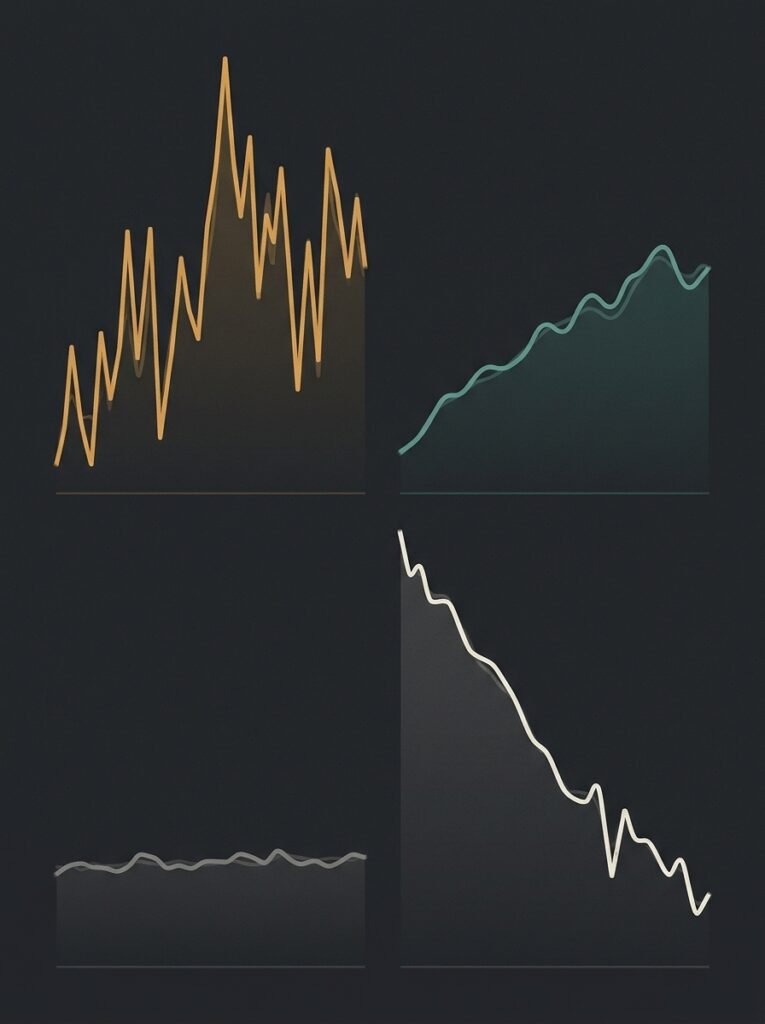
Now the part that isn’t confused. Several well-documented studies point the same direction, and they broadly agree on direction even where they disagree on magnitude.
Ahrefs, in an updated study published 4 February 2026 by Ryan Law and Xibeijia Guan, analysed 300,000 keywords — 150,000 with AI Overviews, 150,000 without — against aggregated Search Console data, comparing December 2023 to December 2025:
- Informational keywords without an AIO: position-one CTR fell from 7.6% to 3.9%
- Informational keywords with an AIO: position-one CTR fell from 7.3% to 1.6%
- Controlling for general trends, AIOs correlated with a 58% CTR reduction for top-ranking pages
Read those first two lines again, because they matter. CTR fell on non-AIO keywords too. Something broader than AI Overviews is going on.
Pew Research measured actual browsing behaviour rather than SERP tracking: when an AI Overview appears, 8% of users click a traditional search result, versus 15% without — a relative decline of roughly 47%. Clicks on links inside the AI answer: 1%. And 26% of sessions ended right after an AIO page, against 16% without. Google publicly called Pew’s methodology flawed. Pew stood by it.
Chartbeat, via the Reuters Institute’s Journalism and Technology Trends and Predictions 2026 report published 13 January 2026 and reported by Press Gazette:
- Google search traffic to publishers fell 33% globally in the year to November 2025
- US publishers were hit harder, at −38%
- Google Discover referrals to more than 2,500 publisher sites: −21%
That Discover figure deserves its own line, because if your traffic strategy leans on Discover, that’s your number and it rarely gets quoted.
Finding 3: The trend reversed in early 2026, and nobody told you
This is the finding that changes the mood, and it’s buried in a study most of the doom posts predate.
Seer Interactive published a longitudinal study in April 2026 covering 2.43 billion impressions, 53 brands and 5.47 million queries, running January 2025 to February 2026. Three results:
- Organic CTR on AIO queries fell from 1.76% to 0.61% by September 2025 — a 65% collapse. This is the number the doom posts quote.
- It then rebounded 85%, to roughly 2.4% by February 2026. This is the number they don’t.
- Meanwhile CTR on queries without an AIO rose from 2.8% to 3.8% over the same period.
Datos independently supports the direction: US zero-click fell from 24.5% in December 2025 to 22.4% in March 2026. Semrush found the zero-click rate on AIO keywords dropped from over 45% in January 2025 to 38% by October.
Be careful about what this does and doesn’t mean. It does not mean the traffic came back — a 2.4% CTR is still far below the 7.3% of December 2023. It means the bleeding slowed, and there’s a reasonable case that the worst of the 2025 disruption has passed as users learned what AI Overviews are and stopped treating them as the whole answer.
The persistent gap — roughly 37% between AIO-present and AIO-absent queries, per Seer — is the new normal. Plan around that, not around a collapse that already happened.
The part that actually matters if you’re small
Here’s where every “median publisher down 10%” statistic quietly becomes irrelevant to you.
Chartbeat’s March 2026 data, released exclusively to Axios, found that small sites lost 60% of their search referrals over two years — against 22% for large publishers.
That is the whole story for anyone reading a blogging site. The averages are being pulled up by big brands with direct traffic, apps, newsletters and brand recognition. If you are one person with four WordPress sites, the median is describing somebody else’s year.
Why the asymmetry? Digital Applied’s March 2026 data offers a clue: branded queries with AIOs actually see an 18% CTR increase. And ALM Corp’s 2026 analysis found that brands cited in AI Overviews earn 35% more organic clicks. AI Overviews are not suppressing clicks uniformly. They are redistributing them toward recognised brands and cited sources.
If nobody searches your name, you’re on the wrong side of that redistribution.
The lie you’re being sold: “just get AI traffic instead”
Every course, newsletter and thread in this niche is now pitching Answer Engine Optimization as the replacement. Optimise for ChatGPT, get cited, replace your Google traffic.
Here is the number that ends that conversation.
Per the Reuters Institute / Chartbeat 2026 report: ChatGPT referrals to publishers grew more than 200% — and still account for less than 1% of all referrals.
Two hundred percent growth on a number that small is still a number that small. Chatbot traffic is nowhere near offsetting search declines, and anyone telling you to rebuild your business around it right now is selling you a strategy for a traffic source that doesn’t exist at meaningful scale yet.
That is not an argument for ignoring AI citation. Being cited is clearly valuable — the 35% figure above is real. It’s an argument against treating it as a replacement. It’s a brand signal, not a traffic channel. Anyone conflating the two either hasn’t read the data or is counting on you not to.
What the industry is actually doing
Worth knowing, because it tells you where this goes.
Legal: Penske Media — publisher of Rolling Stone, Variety, Deadline, The Hollywood Reporter and Billboard — filed a federal court memorandum in February 2026 opposing Google’s motion to dismiss its antitrust suit, arguing Google is cannibalising publisher traffic. The European Publishers Council has filed a formal complaint with the EU Commission. Chegg’s suit alleges Google trained on educational publishers’ content to build a system that now competes with them; Chegg reported a 49% decline in non-subscriber traffic between January 2024 and January 2025.
Strategic: the Reuters Institute surveyed 280 media leaders across 51 countries. The median expectation is a 43% search traffic decline by 2029, with about 20% expecting losses over 75%. Most now plan to put less effort into traditional Google search in 2026. Confidence in journalism’s prospects has fallen from 60% in 2022 to 38% now.
Where they’re going instead: subscriptions and memberships are the top revenue focus at 76%, ahead of display at 68%. And 76% of media leaders plan to encourage staff to behave more like creators.
Social is a partial, unreliable hedge. Press Gazette reports referrals were flat or slightly up globally — X up 15% year on year in November, Facebook up 9%, with stronger US growth (X +29%, Facebook +23%). But X fell 22% in Europe, and Facebook referrals remain 43% below where they were in May 2023.
So what do you actually do?
No tricks, because there aren’t any. What the data supports:
- Stop measuring traffic. Start measuring revenue per session. Publishers who converted well survived this better than publishers who ranked well. That’s the clearest signal in every study.
- Get searched by name. Branded queries with AIOs gain CTR. Every other query type loses it. This is slow, unglamorous work and it is the only structural defence in the data.
- Write what an AI can’t answer in a paragraph. Original data, first-hand testing, actual numbers from your own experience. Summarisable content gets summarised — that’s not a bug in the system, it’s the system.
- Check your own Discover number. Down 21% is the industry figure. Yours may be very different, and it’s the one that matters.
- Diversify, but honestly. Email is the only channel you own. Social is volatile and regionally inconsistent. Chatbot referrals are under 1%. Plan accordingly.
- Don’t buy the course. Anyone with a repeatable fix for a 58% CTR decline would be using it, not selling it.
Key Takeaways
- The zero-click numbers contradict each other because they use incompatible methods: 69% (Similarweb), 60% (The Digital Bloom), 80–83% on AIO queries (Click Vision), 22.4% (Datos clickstream). Always ask whose panel.
- The decline is real: Ahrefs found a 58% CTR reduction on AIO keywords across 300,000 keywords (February 2026). Pew found 8% click rate with an AIO vs 15% without.
- Chartbeat: Google search referrals to publishers −33% globally, −38% in the US, Discover −21%, year to November 2025.
- The trend reversed in early 2026. Seer: CTR on AIO queries bottomed near 1.3% in December 2025 and rebounded to ~2.4% by February 2026. Datos: US zero-click fell over the same window.
- Small sites got hit ~3x harder. Chartbeat, March 2026: −60% for small sites vs −22% for large.
- AI Overviews redistribute clicks, not just suppress them. Branded queries gain; cited brands earn 35% more organic clicks.
- ChatGPT referrals grew 200%+ and are still under 1% of referrals. It is not a traffic replacement.
- Median publisher expectation: −43% search traffic by 2029. Subscriptions are now the top revenue
FAQ
Are AI Overviews really reducing publisher traffic? Yes, and it’s well documented. Ahrefs analysed 300,000 keywords in February 2026 and found a 58% click-through rate reduction for top-ranking pages on AI Overview keywords. Chartbeat recorded a 33% global fall in Google search referrals to publishers in the year to November 2025.
Why do zero-click statistics contradict each other? Because they measure different things. Keyword-level SERP analysis asks whether a click happened for a given query; clickstream panel data asks what share of a real person’s searches ended without a click. That’s why Similarweb reports 69% and Datos reports 22.4%. Neither is wrong; they aren’t comparable.
Is the traffic decline still getting worse in 2026? Apparently not. Seer Interactive’s longitudinal study found organic CTR on AI Overview queries bottomed at roughly 1.3% in December 2025 and rebounded to about 2.4% by February 2026. Datos found US zero-click rates falling between December 2025 and March 2026. The decline appears to have levelled off, though CTR remains far below pre-AIO levels.